
time:2026-04-21
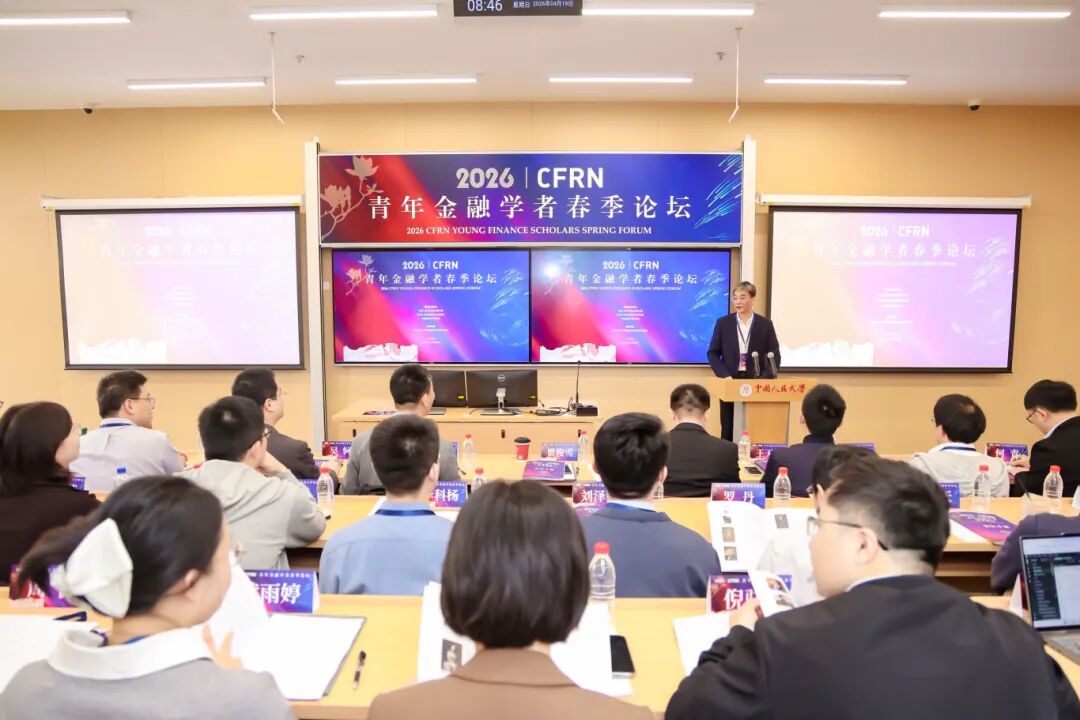
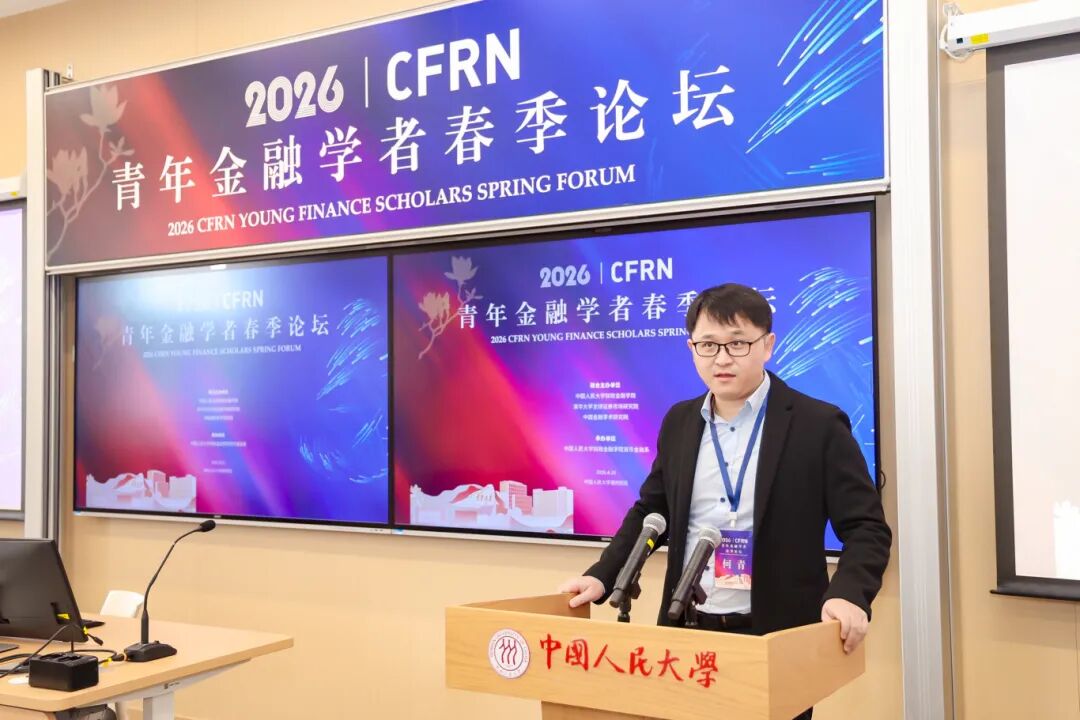
To thoroughly study and implement the spirit of General Secretary Xi Jinping’s important speeches at the Symposium on Philosophy and Social Sciences and during his inspection visit to Renmin University of China, and to encourage young financial scholars to ground their research in Chinese practice and respond to the questions of the times, the 2026 CFRN Young Financial Scholars Spring Forum was held on April 19, 2026, at the Tongzhou Campus of Renmin University of China. The forum was jointly hosted by the School of Finance of Renmin University of China, the Institute for Global Securities Markets at Tsinghua University, and the China Financial Research Network.As an annual gathering of young scholars in the field of finance, CFRN has long been committed to building a high-level and international academic exchange platform. This year’s forum brought together outstanding young scholars from leading universities at home and abroad to discuss the latest research findings and frontier trends in finance.
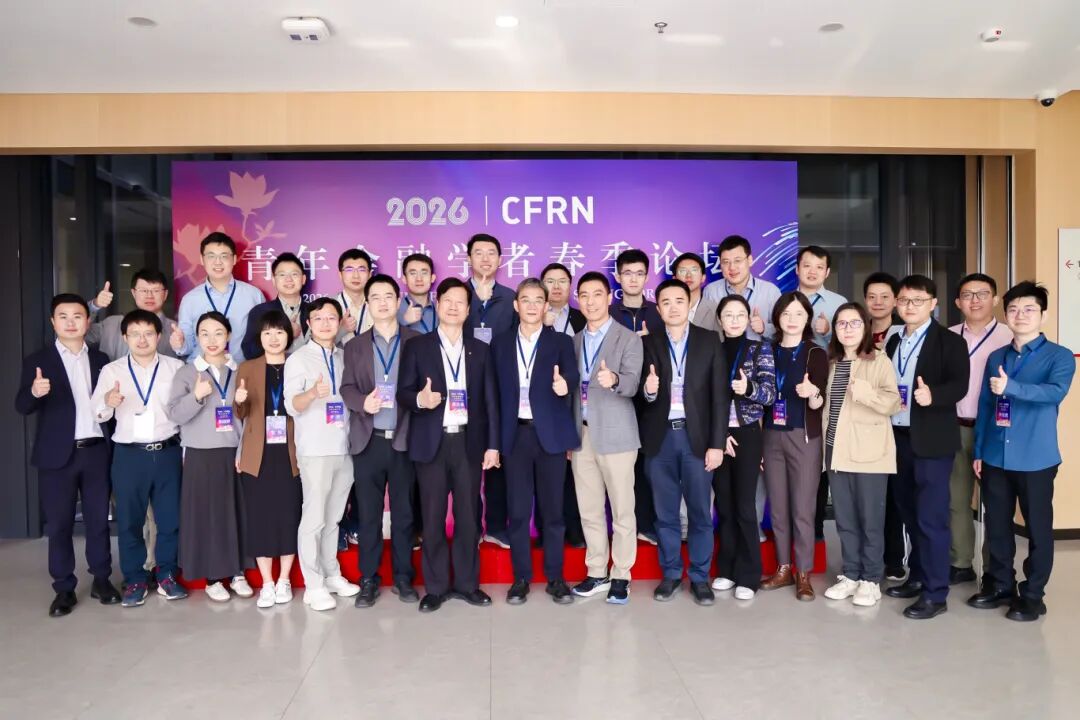
Financial scholars from the School of Finance of Renmin University of China, the School of Economics and Management of Tsinghua University, the International School of Finance of Fudan University, the School of Management and Economics of The Chinese University of Hong Kong, Shenzhen, the School of Economics and Management of Harbin Institute of Technology, Shenzhen, the School of Finance of Central University of Finance and Economics, the School of Economics of Beijing Institute of Technology, the School of Economics of Zhejiang University, the Business School of The Chinese University of Hong Kong, the Guanghua School of Management of Peking University, Nanyang Business School of Nanyang Technological University, the School of Innovation and Development of Central University of Finance and Economics, the School of International Trade and Economics of the University of International Business and Economics, the International School of Business & Finance of Sun Yat-sen University, and the School of International Economics and Management of Capital University of Economics and Business presented and actively discussed their latest research findings in sequence.
Opening Ceremony
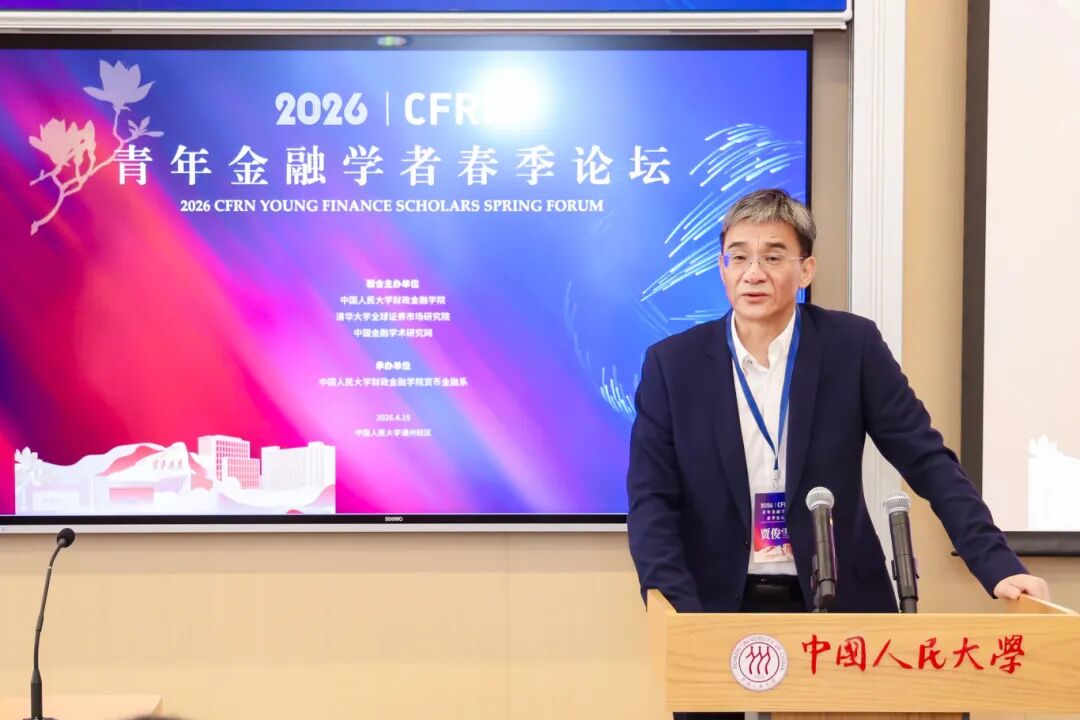
At the opening ceremony, Professor Jia Junxue, Dean of the School of Finance at Renmin University of China, extended a warm welcome on behalf of the School to all guests attending the 2026 CFRN Young Financial Scholars Spring Forum. He also expressed sincere gratitude to the co-organizers, the Institute for Global Securities Markets at Tsinghua University and the China Financial Research Network.He introduced the distinctive features of this year’s forum as “small but beautiful” and “small but refined.” He noted that the forum received nearly 170 valid submissions, representing a year-on-year increase of more than 152%, while the acceptance rate was only 4%. This fully demonstrated the forum’s rigorous academic selection standards and its growing appeal among young scholars.Professor Jia emphasized that against the backdrop of the national strategy to build China into a financial powerhouse, constructing an independent Chinese knowledge system in public finance and finance is not only an important theoretical issue, but also an urgent practical need. He pointed out that Chinese scholars have the responsibility to summarize and refine China’s great achievements and unique experience since reform and opening-up, and elevate them into general theories. Finally, he encouraged young scholars to cherish the opportunity for academic exchange at the forum, learn from one another through discussion, and strive to “write their papers on the land of the motherland.”
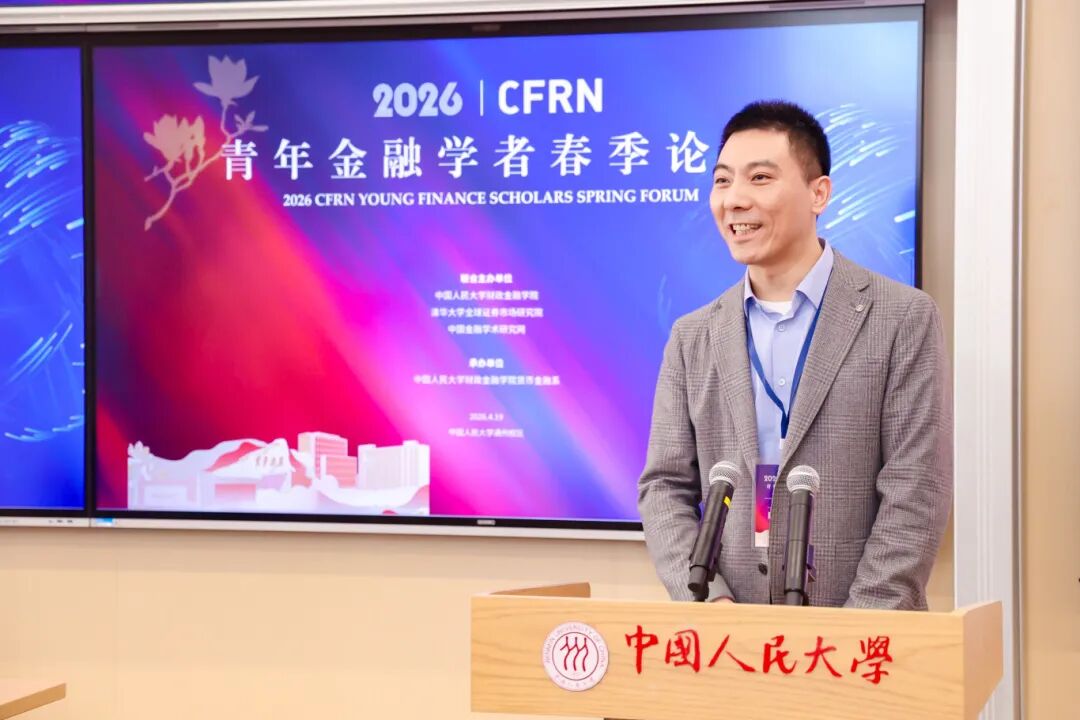
In his remarks, Professor Gao Feng, Deputy Party Secretary of the School of Economics and Management at Tsinghua University, first expressed sincere thanks to the School of Finance of Renmin University of China for its strong support for the conference and to the organizing team for their hard work. He also highly praised Renmin University of China’s leading position in the field of public finance and finance in China.He then introduced the original mission and development goals of the China Financial Research Network, and called on participating scholars to continue supporting the website’s development by actively submitting and sharing their latest research results.Finally, drawing on the characteristics of China’s current major economic transformation, Professor Gao cited former Dean Qian Yingyi’s discussion of the “three levels” of academic research. He encouraged the young scholars present to seize the opportunities of the times, not merely aim to publish ordinary journal articles, but strive to produce truly interesting papers that go beyond top journal publication and create new ideas of value for the era.
The opening session was chaired by Professor He Qing, Chair of the Department of Money and Finance at the School of Finance of Renmin University of China and Vice President of the National Academy of Financial Research.
This forum discussed a total of seven recent academic papers, covering key areas such as token financing, corporate bond returns, local fiscal risks, option market prediction, private equity, and environmental finance. Participating scholars engaged in in-depth discussions on frontier topics including liquidity premium pricing, credit risk measurement, the interaction between public finance and finance, the informational content of volatility, market return prediction, risk premium structures, and heterogeneous policy effects.
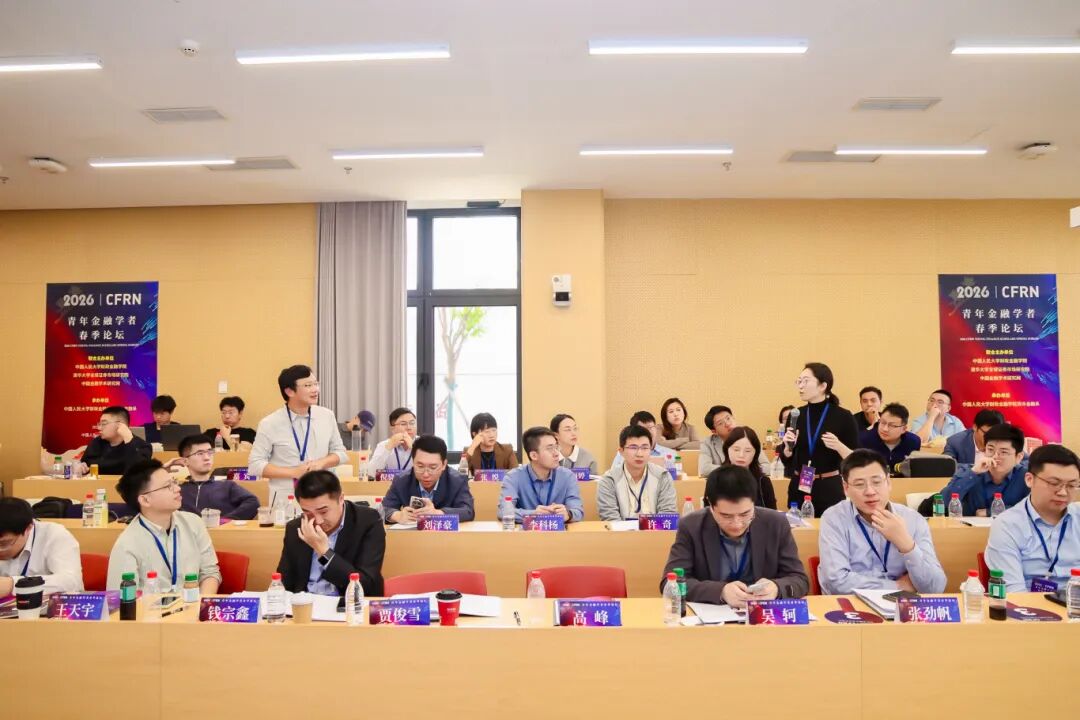
Session 1
Understanding Corporate Bond Excess Returns
Presenter: Lu Xiaomeng, Fudan University

This study provides an in-depth analysis of the long-standing issue of measuring excess returns in the corporate bond market. Its core innovation lies in constructing a new measurement indicator: using “synthetic Treasury bonds” with the same cash flows as corporate bonds as the benchmark. This approach completely removes the interference caused by interest rate fluctuations and accurately isolates the return component unique to corporate bonds.The study finds that corporate bond-specific excess returns are not only low on average, but also significantly different in cross-sectional performance from traditional excess returns based on short-term Treasury bills and duration-adjusted returns. This suggests that conventional methods for measuring risk premia may contain certain systematic biases.
Discussant: Zhang Jinfan, The Chinese University of Hong Kong, Shenzhen
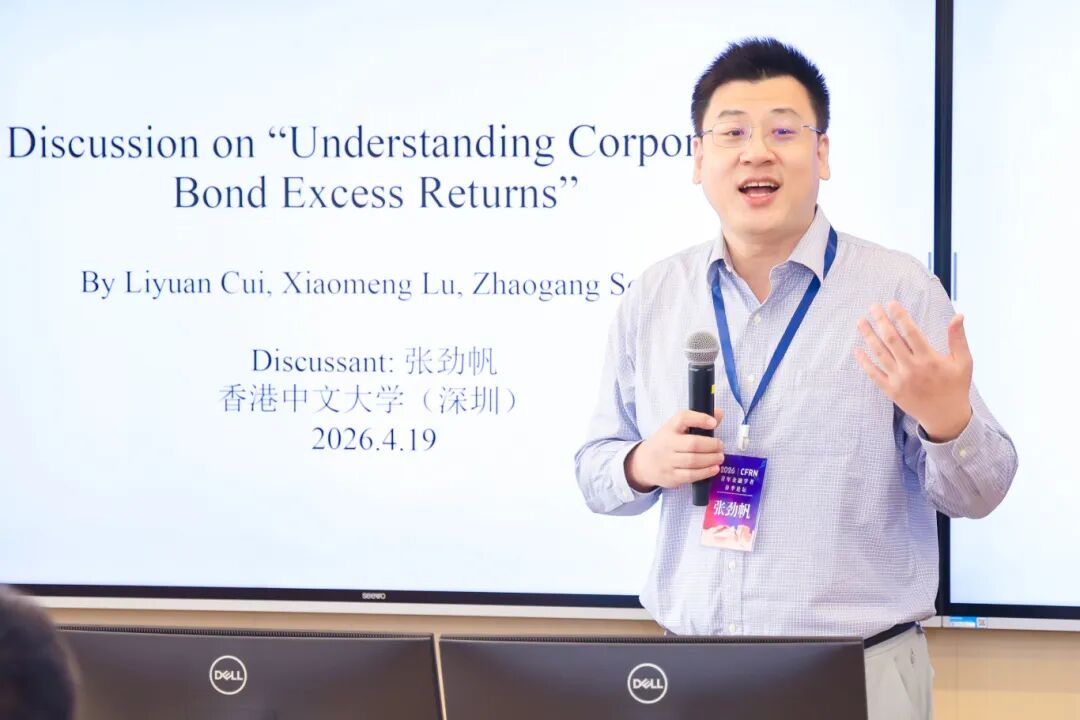
Traditional calculation methods usually simply subtract the yield of short-term Treasury bonds or Treasury bonds with similar maturities from the actual bond return. Although widely used, this approach is somewhat rough in both concept and operation.This paper returns to first principles and proposes constructing “synthetic Treasury bonds” that perfectly match the cash flows of corporate bonds as the benchmark. This fully adjusted excess return measure is conceptually very natural and smooth, forming the paper’s most important methodological innovation. Constructive discussion focused on model fitting errors, mechanism explanations, the interpretation of inflation risk effects, and especially the key issues involved in applying and promoting this method in both academia and practice.
Do Implied Volatility Spreads Predict Stock Market Returns in China? The Role of Liquidity Demand
Presenter: Zhou Ti, Harbin Institute of Technology, Shenzhen
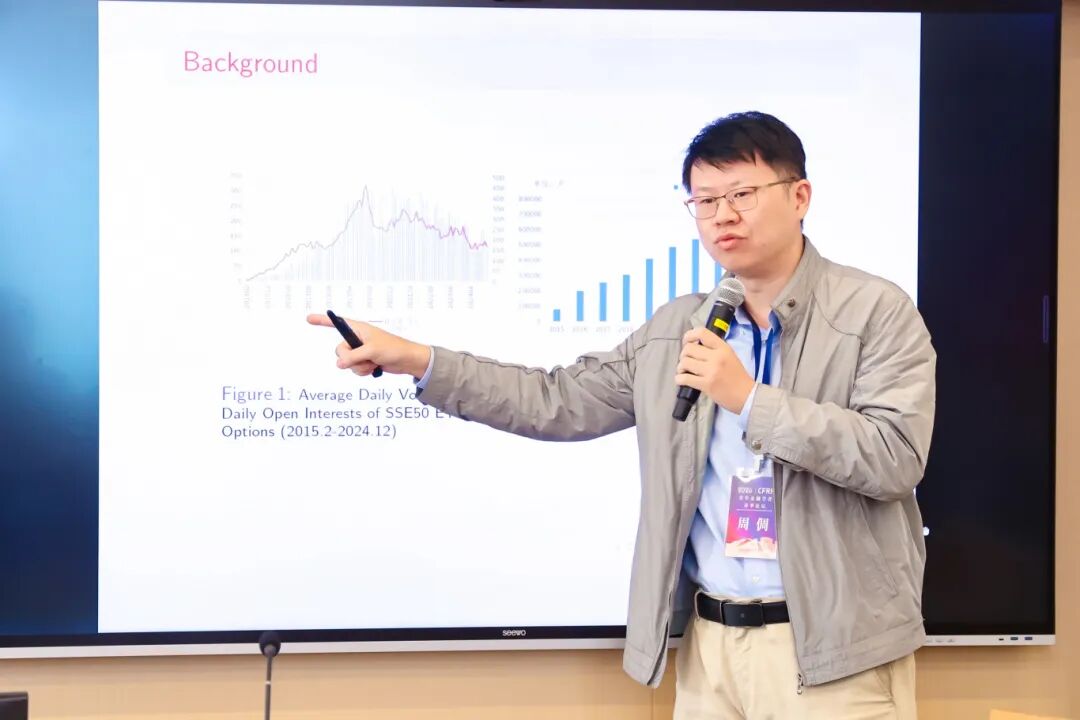
This study examines the informational content and return prediction ability of implied volatility spreads, or IVS, of SSE 50 ETF options in China’s stock market. The paper constructs an open-interest-weighted IVS indicator by calculating the spread between the implied volatility of call and put options, and conducts a series of empirical tests.The study finds that, in sharp contrast to the U.S. market where IVS positively predicts stock returns and is usually interpreted as information trading, IVS in the Chinese market has a highly significant negative predictive power for future underlying asset returns. This conclusion remains highly robust after controlling for numerous traditional option and macroeconomic variables.The paper further separates the effects of investor sentiment and option-implied short-selling costs, and proposes and verifies the core mechanism of “liquidity demand.” Because the spot market faces short-selling restrictions, investors turn to the options market to express trading demand through synthetic short positions and other methods. After bearing inventory risk, option market makers must hedge in the spot market. This liquidity demand transmitted from the derivatives market pushes up current spot prices and eventually leads to future return reversals.
Discussant: Zhu Yandi, Central University of Finance and Economics
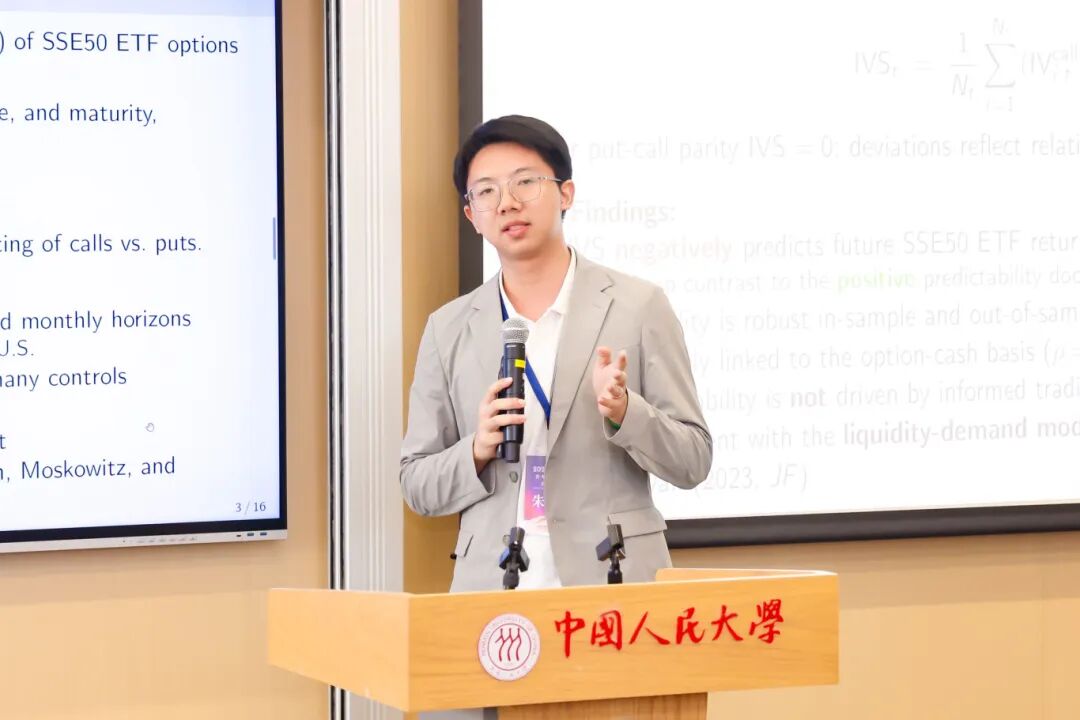
This study identifies an extremely strong and robust predictive indicator in the Chinese market, despite a short sample period and frequent policy shocks. While fully recognizing its contributions, the discussant offered five suggestions to further improve the rigor and applicability of the research.First, given the extremely strong short-selling restrictions in China, the study could separately examine the asymmetric predictive power of positive and negative spreads. Second, the authors could run horse-race regressions between IVS and option order imbalance measures recently proposed in the literature, in order to demonstrate that IVS contains additional forward-looking information. Third, intraday high-frequency data could be used to provide clearer support for the liquidity demand hypothesis. Fourth, out-of-sample tests could be conducted on mid- and small-cap products with greater market maker inventory risk, such as actively traded CSI 1000 index options. Fifth, the paper could add a break-even analysis after deducting transaction costs, and directly compare IVS with the predictive power of the more mature futures-spot basis.
Session 1 was chaired by Professor Wu Ke, Chair of the Department of Applied Finance at the School of Finance of Renmin University of China.
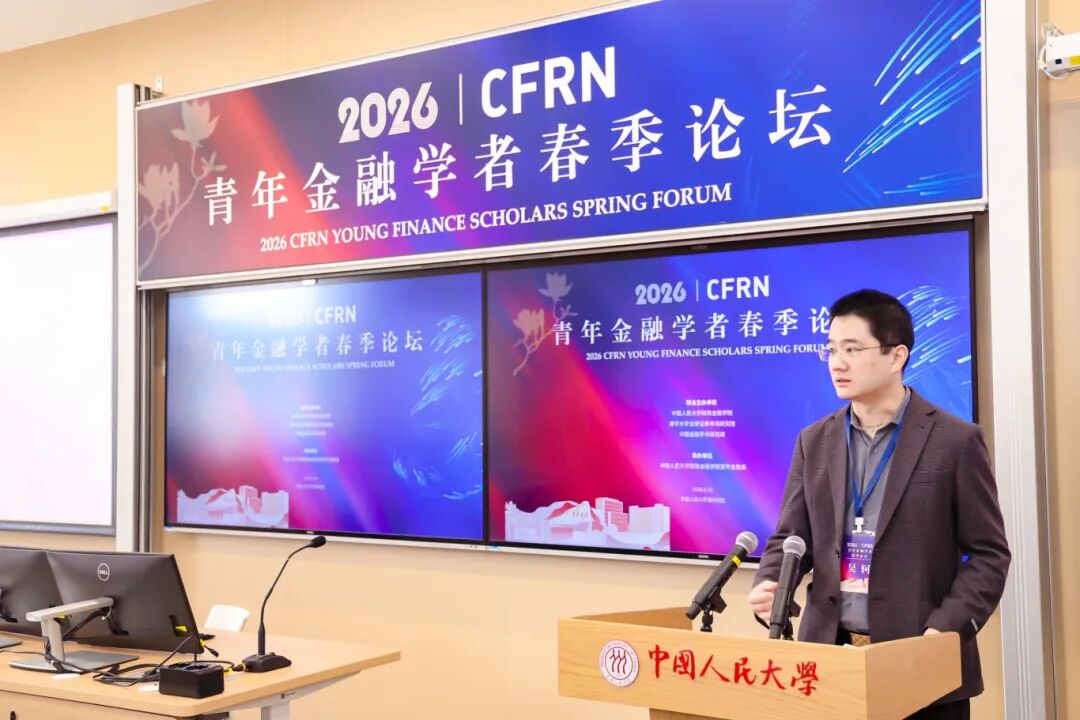
Session 2
Financing via Partially Liquid Tokens
Presenter: Zhuo Xiaoyang, Beijing Institute of Technology
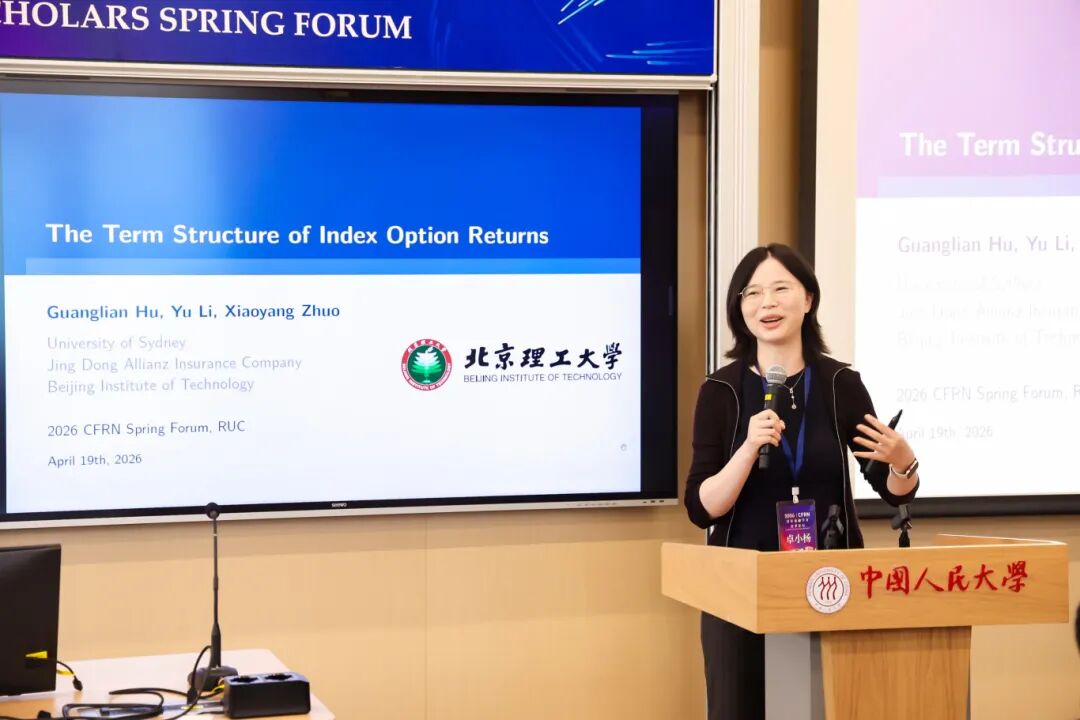
This study examines the term structure of index option returns by comparing expected returns implied by option pricing models with actually realized returns. The study finds that models containing only the equity risk premium, such as the BSM model, cannot fit panel data on option returns, especially the returns of short-term out-of-the-money options.Although diffusion volatility risk premia and volatility jump risk premia can better match one-month index option returns, they cannot fit longer-maturity option returns. The study points out that the price jump risk premium is sufficient to explain the term structure pattern of index option returns, but its success depends crucially on pricing the variance risk of price jump size. In addition, the paper presents new results on higher moments of option returns and the dynamic changes of conditional expected returns for the first time.
Discussant: Xu Qi, Zhejiang University
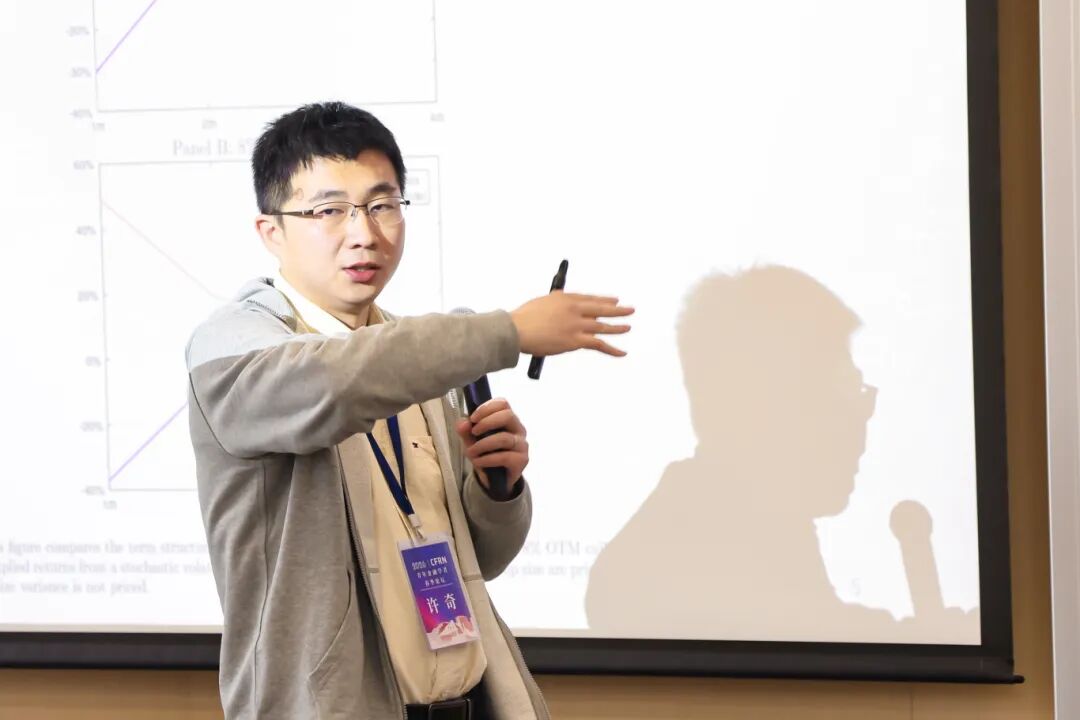
This study addresses a novel topic and offers insightful results. It is a comprehensive paper on the term structure of option returns. However, several aspects deserve further development.First, regarding diffusion volatility, the paper could consider introducing a multi-factor volatility model, which may help explain the term structure without relying on jump risk. Second, the authors could more clearly demonstrate the economic benefits and risk-return characteristics of tradable option portfolios constructed based on conditional moments of option returns, and explain the differences in model-implied Sharpe ratio fitting between call and put options. Third, the authors could compare the predictive power of model-implied volatility risk premia with model-free indicators, and further explain the sign reversal of the slope coefficient in regressions of realized returns on expected returns.
Understanding Corporate Bond Excess Returns
Presenter: Luo Dan, The Chinese University of Hong Kong
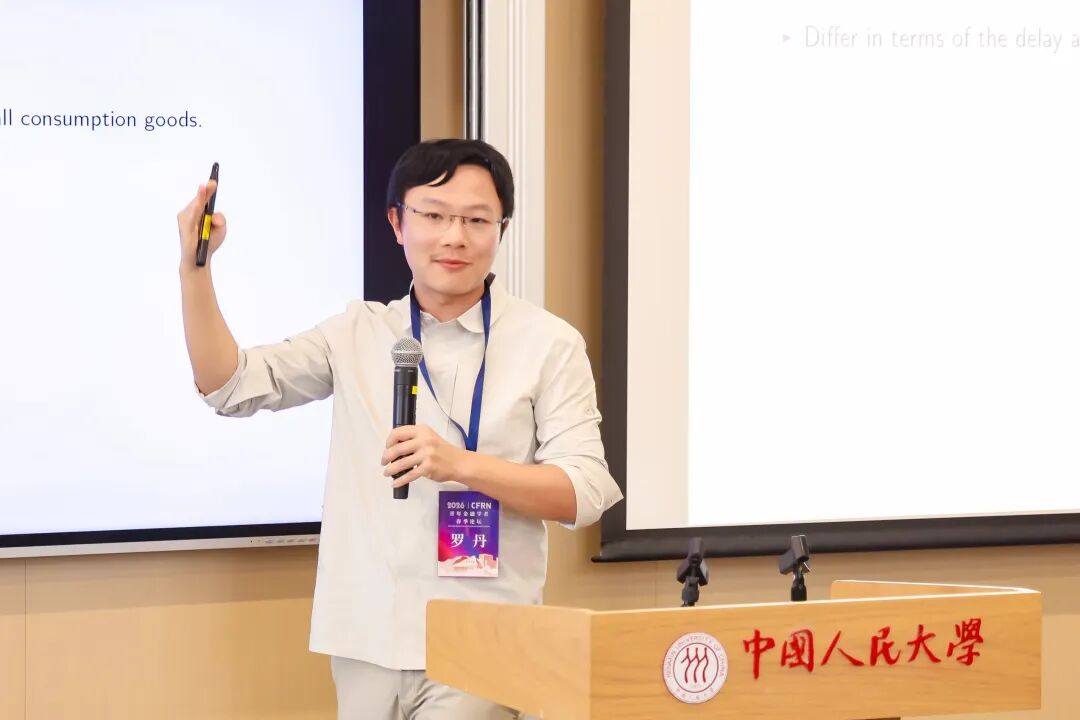
This study constructs a Diamond-Dybvig-style model of financing through partially liquid tokens, providing a unified explanation for the endogenous premium, issuance decisions, and design rules of enterprise service tokens.The theoretical analysis shows that tokens can only be used to redeem firm-specific services, thereby creating partial liquidity. When consumers face uncertain liquidity needs and ex post borrowing costs, this partial liquidity generates an endogenous liquidity premium. The premium has a non-monotonic relationship with illiquidity costs and changes as consumers switch between external choices of deposits and long-term investment.The study further demonstrates that tokens and bank demand deposits are not pure substitutes. Within certain liquidity ranges, they can coexist as complements and even improve the stability of bank deposits. At the same time, the model clarifies the optimal scenarios for token issuance: firms have stronger incentives to issue tokens when they provide high-value, low-frequency services that complement other consumption. When demand for the firm’s services is negatively correlated with other consumption, the token premium may become negative, and the firm should forgo issuance.In addition, the study makes robust predictions about token design: partial redemption, ex post issuance, tradability, and redeemability exhibit significant interactive pricing effects.
Discussant: Xiang Haotian, Peking University
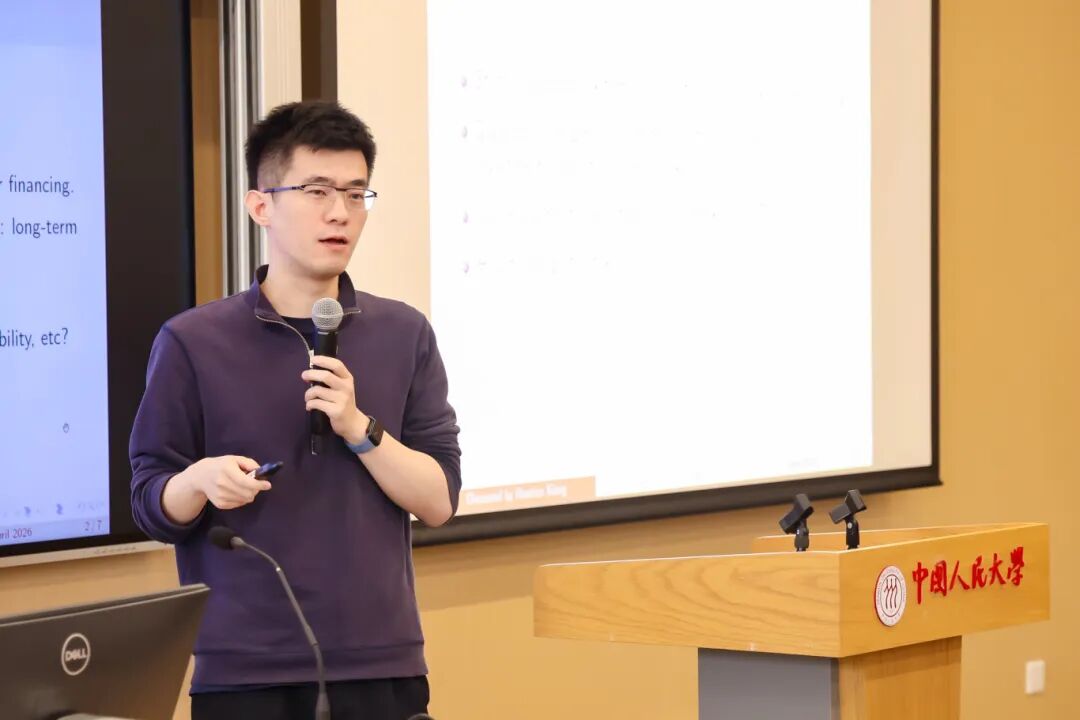
This study offers several potential directions for further extension. The discussant made three suggestions.First, the model’s conclusions rely heavily on exogenously given low deposit rates and high lending rates. It does not fully consider the reality that banks may participate in market competition by adjusting deposit and lending rates, nor does it sufficiently demonstrate whether the research object is centered on large-scale markets.Second, the paper argues that the advantage of tokens lies in the low-cost acquisition of platform services. In practice, however, people hold similar certificates such as airline miles more often because of price discrimination and loyalty incentives rather than cost advantages. Therefore, the motivation for holding tokens deserves further discussion.Third, firm service demand and consumer goods demand may be endogenously correlated. Firms can attract users to migrate to their platforms through large temporary token discounts, which is also an operating strategy used by major crypto platforms. Future research could further construct a dynamic model that incorporates endogenous consumer capital, which would have strong research value.
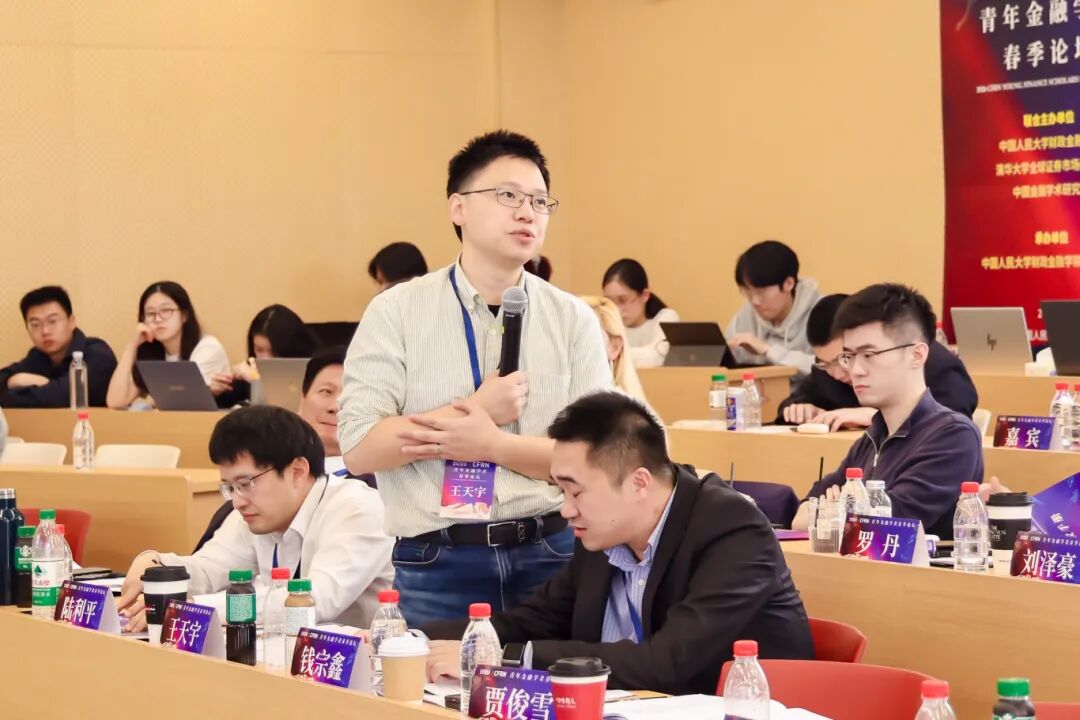
Session 2 was chaired by Associate Professor Wang Tianyu of the School of Economics and Management at Tsinghua University.
Keynote Speech
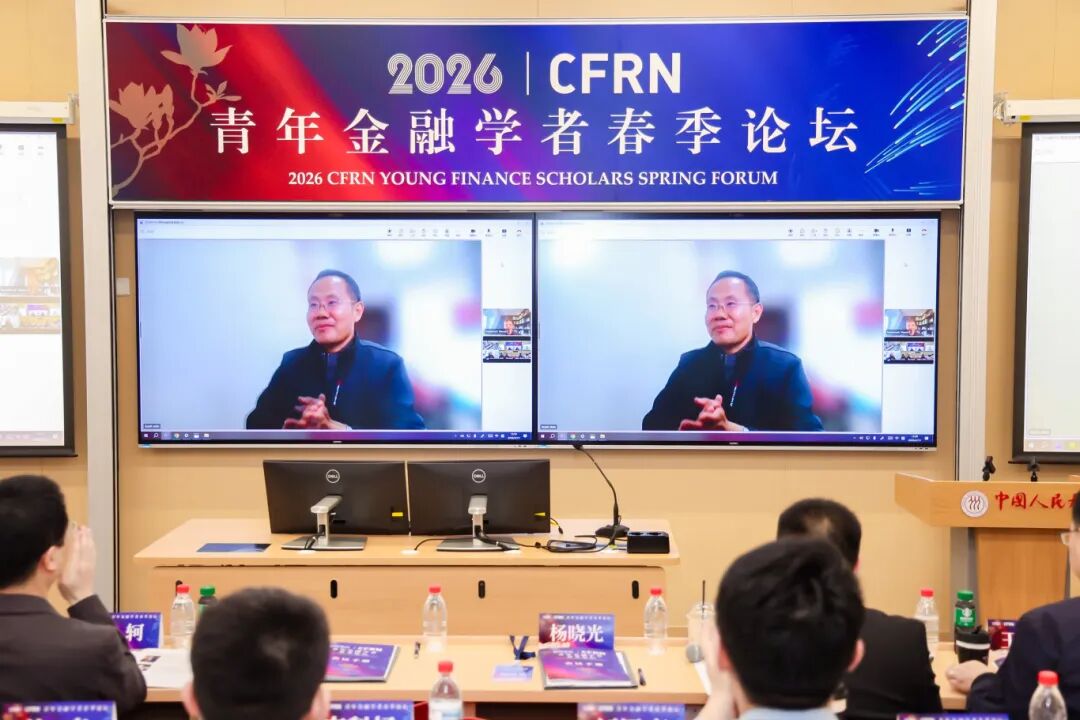
Speaker: Marcin Kacperczyk, Professor, Imperial College Business School

Professor Kacperczyk pointed out that the current mainstream academic paradigm of “selecting a carbon metric first and then running regressions to define the carbon premium” has fundamental flaws. Various mainstream carbon indicators are only weakly correlated, and they may even provide completely opposite green classifications for the same company. The coefficients obtained from regressions are merely projections of true climate risk exposure onto the selected indicator. They cannot identify the underlying economic mechanisms and may also lead to mismeasurement of transition risk, capital misallocation, and corporate “greenwashing.”He emphasized that carbon premium research must be “mechanism-first.” Pricing indicators should be determined by specific policy mechanisms such as carbon taxes and net-zero constraints, rather than by arbitrarily choosing available data. He also presented a structured analytical framework and a normative research path for risk pricing.
The keynote speech was chaired by Professor Zhang Chengsi, Vice Dean of the School of Finance of Renmin University of China.
Session 3
Private Equity and Biodiversity Offset Markets
Presenter: Chen Zhimin, Nanyang Technological University
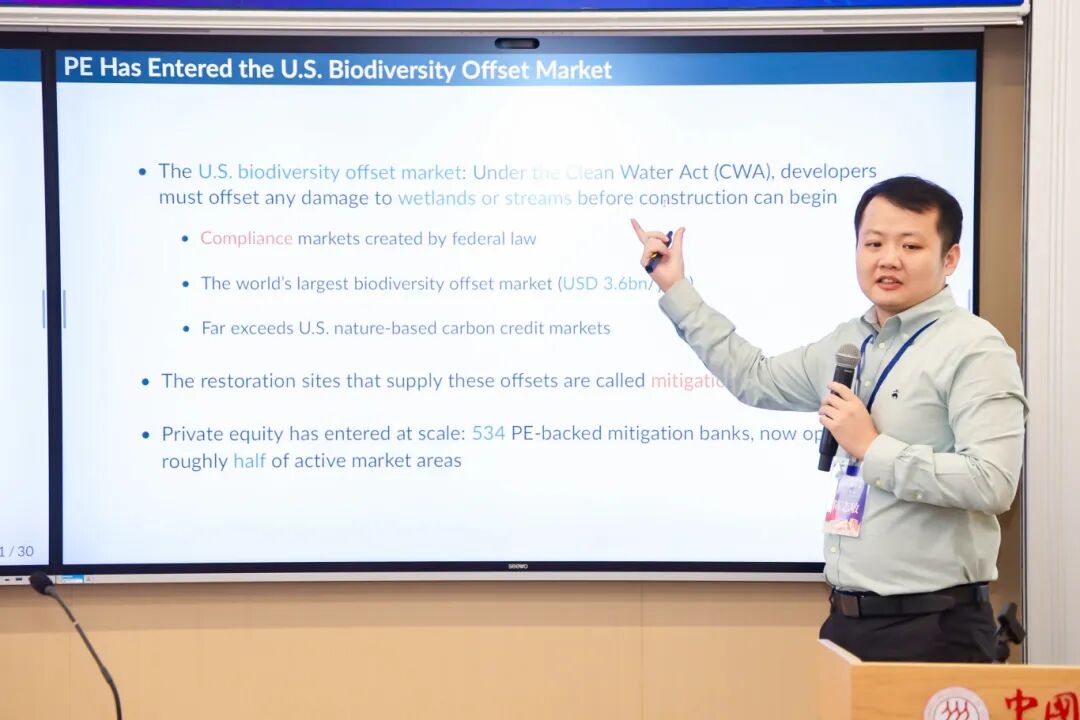
This study examines the actual effects of private equity, or PE, in the U.S. biodiversity offset market. In this market, federal law requires companies that damage wetlands and streams to purchase credits from approved suppliers, namely mitigation banks.The paper constructs a new project-level dataset covering all mitigation banks in the United States. The dataset combines regulatory records, ownership information, geospatial ecological measurement indicators, and detailed data on financial assurances.The study finds that PE entry is concentrated in areas where portfolio companies generate credit demand and in jurisdictions with stable water resource regulation. PE-backed banks release credits earlier and operate at a larger scale, and banks accelerate credit release after being acquired by PE firms.PE entry expands effective supply and increases participation in geographically segmented markets. However, financial assurances do not expand proportionally with project size, resulting in a lower level of protection per unit of credit. In addition, areas served by PE-backed banks experience higher growth in human pressure.The findings reveal a core tension: private capital can deepen conservation markets, but at the same time it may move beyond the design scope of regulatory safeguards intended to protect long-term environmental outcomes.
Discussant: Ni Xiaoran, Central University of Finance and Economics

This study addresses a novel topic and presents interesting results. The discussant suggested five areas for improvement.First, regarding endogeneity, characteristics of HUC-8 watersheds, such as ecological endowments, development intensity, and institutional quality, may simultaneously affect PE location choices and credit demand. Selection bias caused by these factors should be considered.Second, the interpretation of HHI requires caution. The same PE firm may hold multiple banks in the same watershed, leading to an underestimation of market concentration. Intuitively, PE may crowd out small operators, but in reality HHI declines, which requires further explanation.Third, the mechanism of PE entry could be further clarified. After PE entry, the number of new banks increases and exits decline. This may occur through a signaling effect, where PE entry serves as a positive signal, or a monitoring effect, where PE improves market transparency.Fourth, regarding the relationship between “no net loss” and the Human Influence Index, HII also captures economic development and may not directly reflect the failure of ecological compensation. More nuanced interpretations are recommended.Fifth, the benchmark for dilution of financial assurances requires attention. A decline in financial assurance per unit of credit may simply reflect economies of scale, and any large operator, not only PE-backed operators, may show this pattern. Other large entities should be used as benchmarks to determine whether this is a PE-specific issue.
Not in the Spread: Developer Defaults, Municipal Borrowing, and Bank Absorption in China
Presenter: Li Keyang, University of International Business and Economics
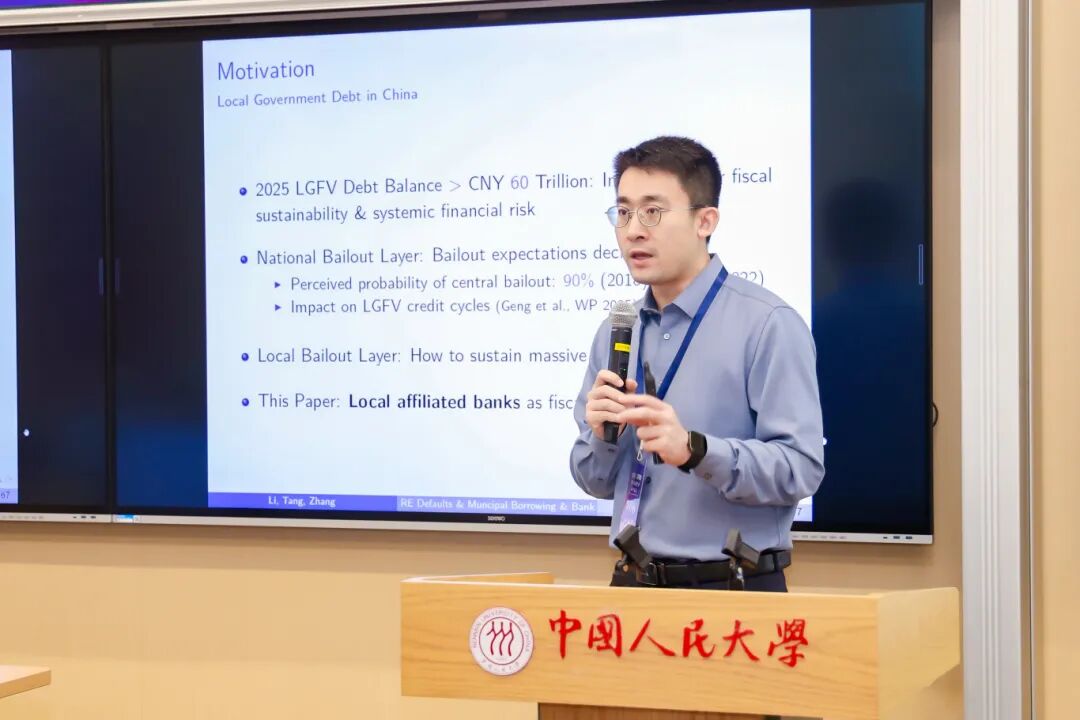
This study uses bond defaults by Chinese real estate developers as exogenous shocks to examine how corporate defaults transmit to public finance and the banking system. Using a staggered DID method and city-quarter panel data for 263 cities from 2016 to 2022, the paper finds that developer defaults triggered significant substitution of local government financing vehicle, or LGFV, bond issuance for land finance revenue.Particularly noteworthy is that this borrowing expansion was not accompanied by widening issuance spreads. Behind this phenomenon was the non-market absorption of LGFV bonds by city commercial banks under local government influence. After absorbing a large amount of local debt, city commercial banks subsequently eased the resulting capital pressure by issuing subordinated bonds and using other methods.This transmission path, from real estate distress to municipal borrowing and ultimately to local banks, reveals a new channel of fiscal-financial risk.
Discussant: Liu Zehao, Renmin University of China
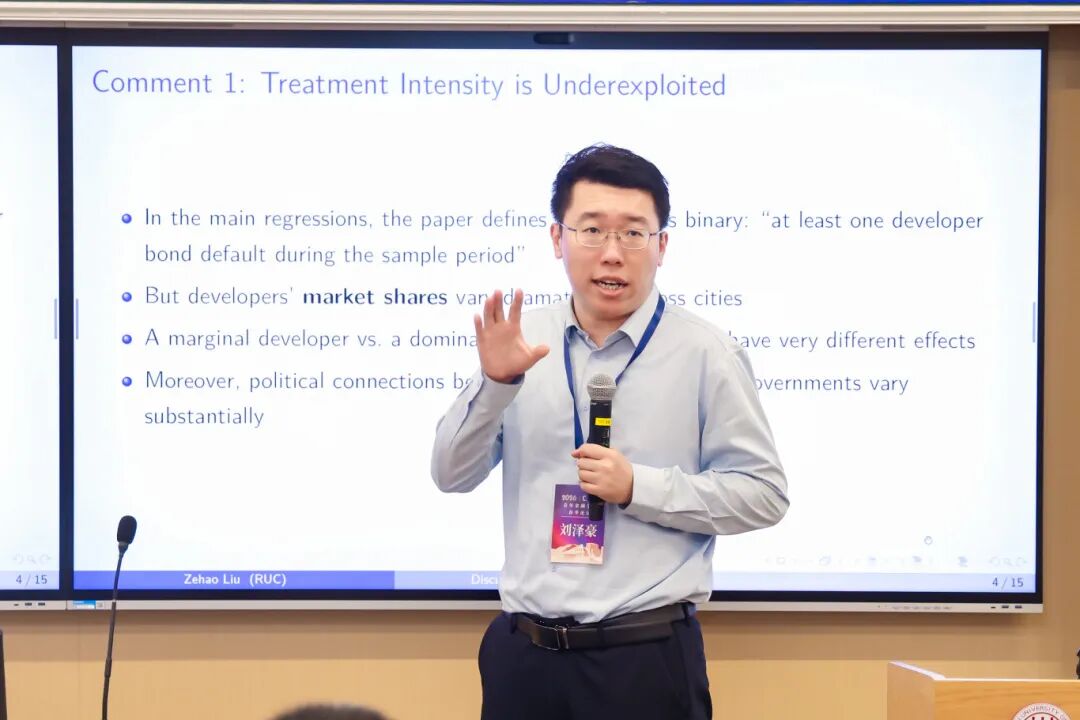
This paper combines practical relevance with institutional insight and has a profound research motivation. On this basis, the discussant offered three constructive suggestions.First, treatment intensity should be measured more precisely. The paper currently uses a binary variable, whether a default occurred, but developers differ greatly in market influence. The authors could promote the “cumulative shock intensity” indicator to the main regression and distinguish developers’ local political connections.Second, the interpretation of unchanged spreads should be treated with caution. This phenomenon may also reflect investors’ “flight-to-safety” behavior. The authors could distinguish between these explanations by comparing bonds with different credit ratings and observing whether city commercial banks increase their holdings of other safe assets.Third, land purchase behavior in 2017 may be endogenous. Aggressive developers may have actively chosen cities with high fiscal dependence. The authors could use the “three red lines” policy to construct an instrumental variable to strengthen causal identification.
Financing Constraints, Implicit Government Guarantee, and Real Estate Market
Presenter: Zhang Yue, Sun Yat-sen University

This study focuses on the relationship among financing constraints, implicit government guarantees, and the real estate market. It examines how China’s “three red lines” policy reshaped the real estate market structure across developers with different ownership types.The study points out that the policy significantly reduced developers’ land purchases, and this effect was entirely concentrated among private enterprises. Developers with government connections were not significantly affected due to implicit government guarantees.This phenomenon led to a dramatic restructuring of the market: the market share of private developers shrank, while the market share of state-owned real estate enterprises expanded. The study reveals that when firms have differentiated government backing, deleveraging policies may backfire by intensifying market concentration rather than promoting market competition, and may give rise to new systemic risks. It provides new empirical evidence for evaluating the effects of real estate financial regulatory policies.
Discussant: Huang Yuting, Capital University of Economics and Business

This study makes substantial efforts in data construction, focuses on the important “three red lines” policy, and reveals how implicit guarantees affect financing mechanisms. The discussant made several suggestions.First, future research could expand the perspective from the demand side to the supply side. Second, the authors could further distinguish among different types of state-owned enterprises and explore issues such as the strength and localization of government backing. Third, the study could examine the transfer of debt leverage to upstream and downstream firms under the policy shock, as well as differences in firms’ debt structures before and after policy implementation.
Session 3 was chaired by Professor Lu Liping, Secretary of the Party Branch of the Department of Money and Finance at the School of Finance of Renmin University of China.

Keynote Speech
Speaker: Yang Xiaoguang, Senior Professor at China University of Petroleum, Beijing, and Researcher at the Academy of Mathematics and Systems Science, Chinese Academy of Sciences
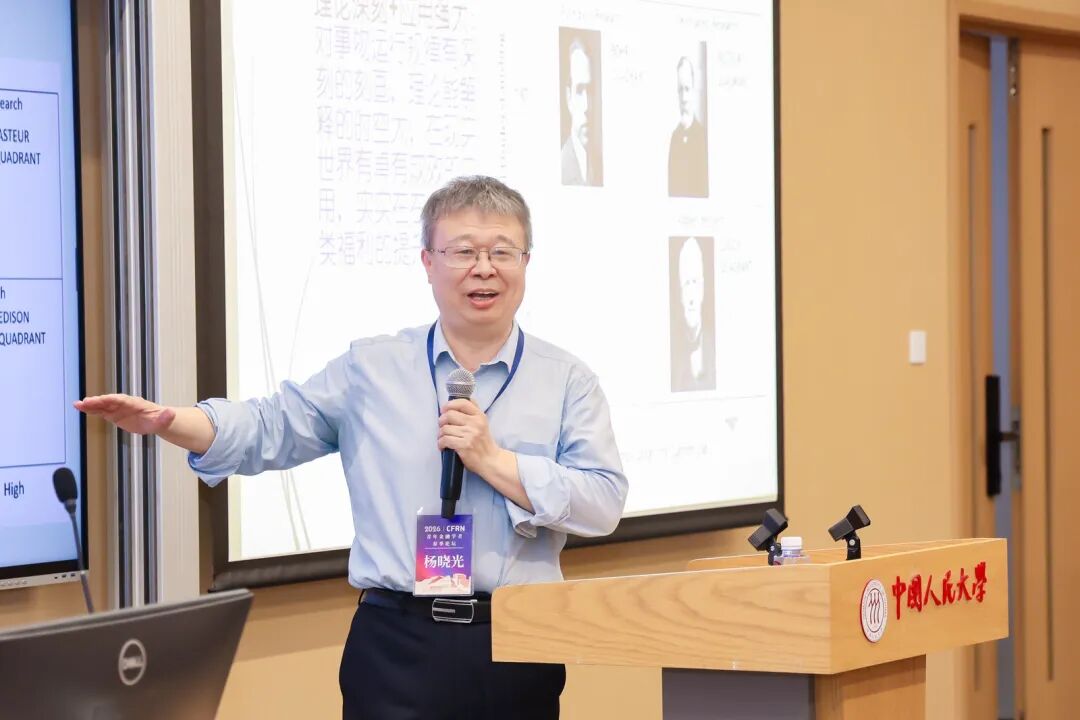
Professor Yang Xiaoguang congratulated the forum on its successful convening and shared his views on the characteristics of economics and management research and the improvement of research quality.He introduced the principles of journal classification, including consensus, scope of influence, hierarchy, and coverage. He also mentioned reference dimensions such as inclusion in important databases, recognition by economics and management schools, and survey opinions from experts in relevant fields.He emphasized that good research questions should focus on the logic of the real world, possess theoretical quality, and use theory to guide thinking. Researchers should pay attention to results that contradict existing theories. He called on researchers to clarify their research paradigms, build solid and long logical chains, and maintain reverse thinking at all times, so as to improve the quality of economics and management research with a rigorous attitude.
The keynote speech was chaired by Professor Qian Zongxin, Vice Dean of the School of Finance of Renmin University of China.

Closing Ceremony
Assistant Professor Chen Zhimin of Nanyang Technological University stood out with the paper “Private Equity and Biodiversity Offset Markets” and won the Best Paper Award of this year’s CFRN Young Financial Scholars Spring Forum.The paper focuses on private equity and biodiversity offset markets, constructs a project-level dataset covering all wetland mitigation banks in the United States, and deeply reveals the real effects and regulatory tensions of private capital entering environmental protection markets. It demonstrates both theoretical innovation and policy value.
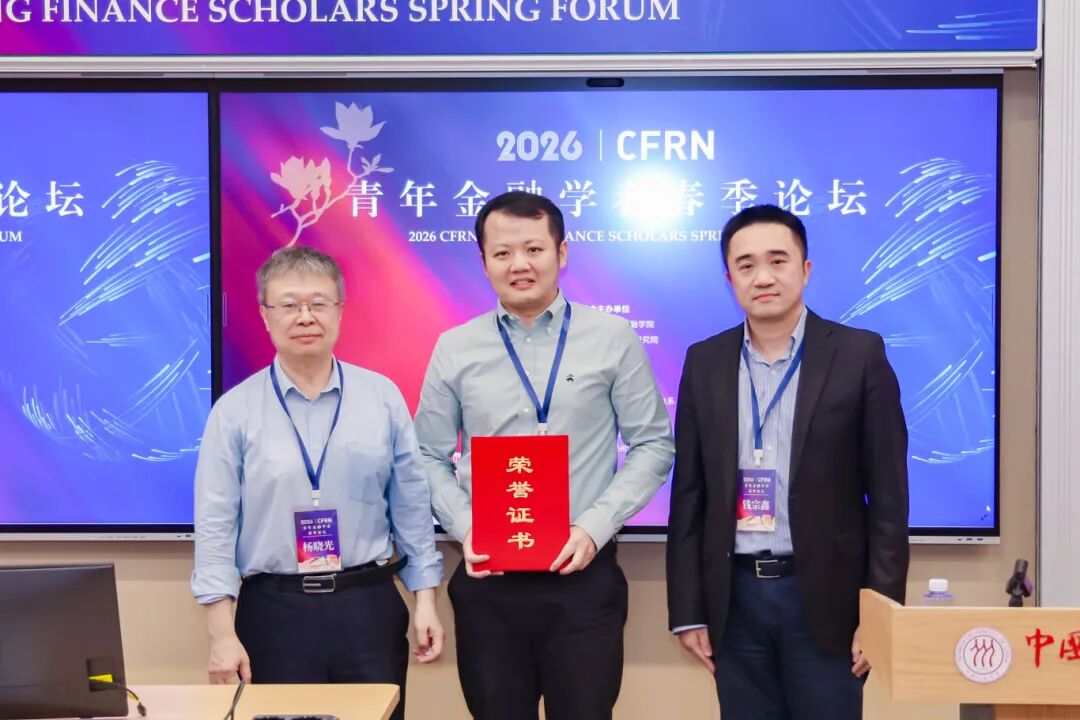
The closing ceremony was chaired by Professor Gao Haoyu, Deputy Chair of the Department of Money and Finance at the School of Finance of Renmin University of China.
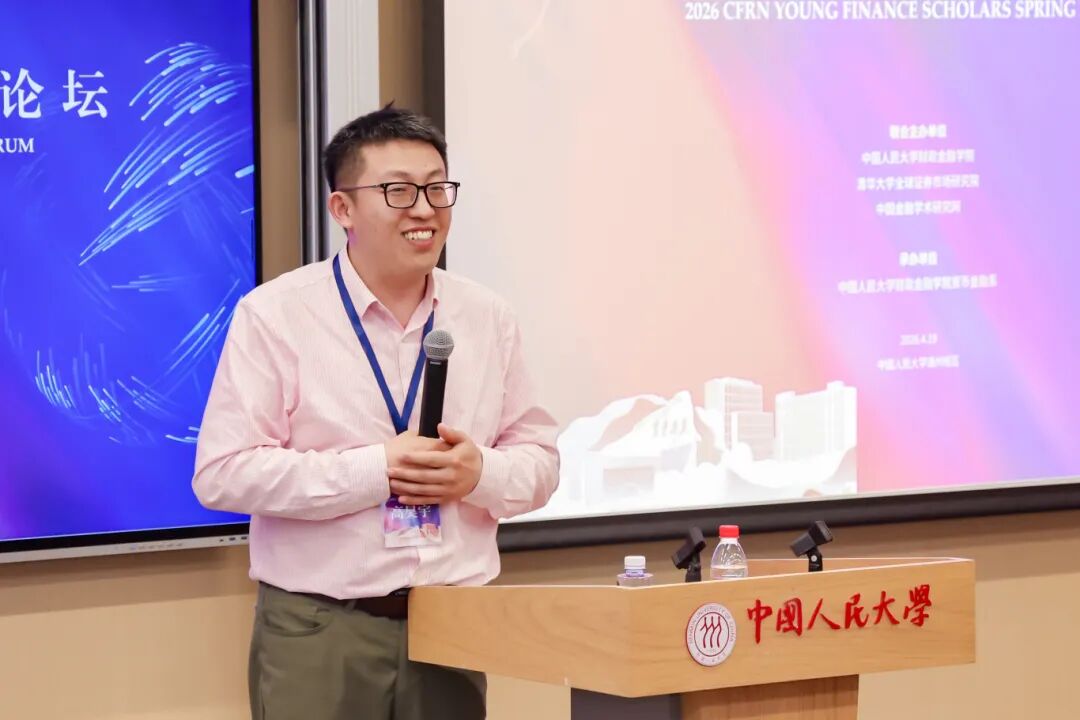
This forum brought together young financial scholars from China and abroad for in-depth discussions on frontier issues in Chinese financial practice. It not only provided a high-level platform for young scholars to present their research findings and exchange academic ideas, but also injected new perspectives and insights into the finance academic community.Grounded in Chinese issues while looking toward global frontiers, participants jointly explored the latest theoretical developments and real-world challenges in finance with rigorous academic spirit and an open attitude toward exchange.The task of building China into a financial powerhouse remains long and demanding, and young scholars have great potential to contribute. Looking ahead, the School of Finance of Renmin University of China will continue to play its role in academic leadership and platform aggregation, deepen exchanges and cooperation with colleagues in the academic community, gather the wisdom of young scholars and global intellectual resources, promote the innovative development of financial research in China, and contribute more strength from RUC Finance to serving high-quality financial development and supporting the building of China into a financial powerhouse.