
time:2026-04-19
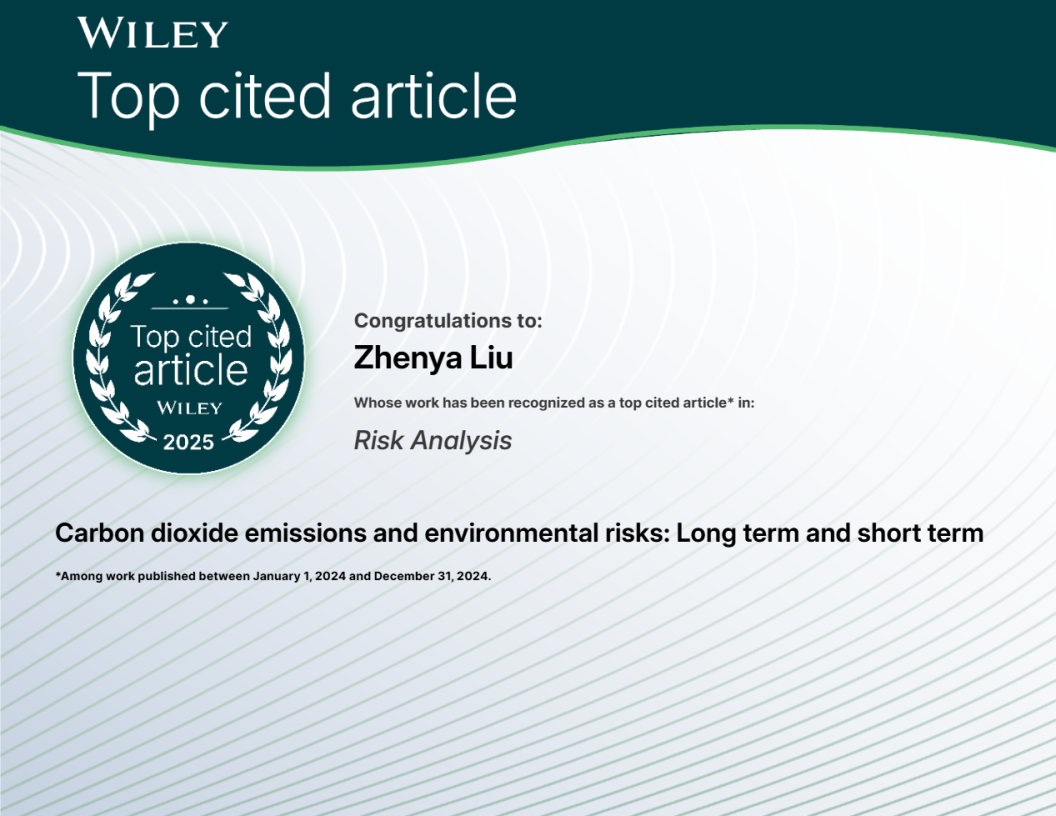
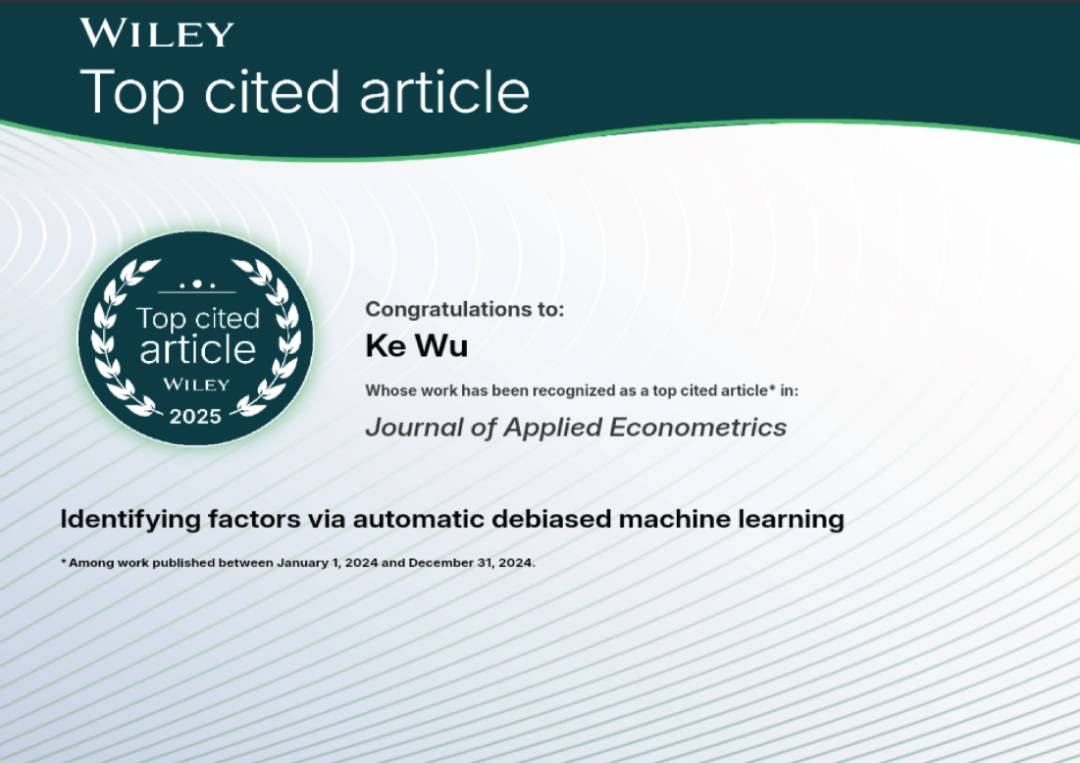
Wiley, the internationally academic publisher, has recently released its annual list of top cited articles. Papers co-authored by the research teams of Professor Liu Zhenya and Professor Wu Ke from the School of Finance, Renmin University of China, have both been named to the 2024 Top Cited Article list and awarded certificates of honor by Wiley. The Top Cited Article designation is currently one of the most important international indicators for evaluating scholarly articles and academic excellence, reflecting the broad recognition accorded to the academic contributions of Chinese scholars on the relevant topics.
Research Highlights: Professor Liu Zhenya's Team
The paper "Carbon dioxide emissions and environmental risks: Long term and short term," published by Professor Liu Zhenya's team in Risk Analysis, has been selected as a 2024 Top Cited Article.
This study examines the environmental challenges posed by carbon dioxide emissions. In the long term, despite the efforts made by countries worldwide, our change-point detection analysis indicates that there has been no structural change in CO2 emissions since 1950. Absent major efforts, the corresponding carbon budget targets of the Paris Agreement will be difficult to achieve by 2046. To meet this goal, global carbon dioxide emissions must decline substantially by 3.22 percent each year. In the short term, although the brief downturn caused by COVID-19 eased the pressure on carbon dioxide emissions, our research shows that CO2 emissions quickly returned to normal levels in the post-pandemic period. In addition, we document the sequencing of the recovery of CO2 emissions across different industries.
Risk Analysis, published by the Society for Risk Analysis, features key empirical studies and reviews and is dedicated to advancing the field of risk analysis.
About Professor Liu Zhenya
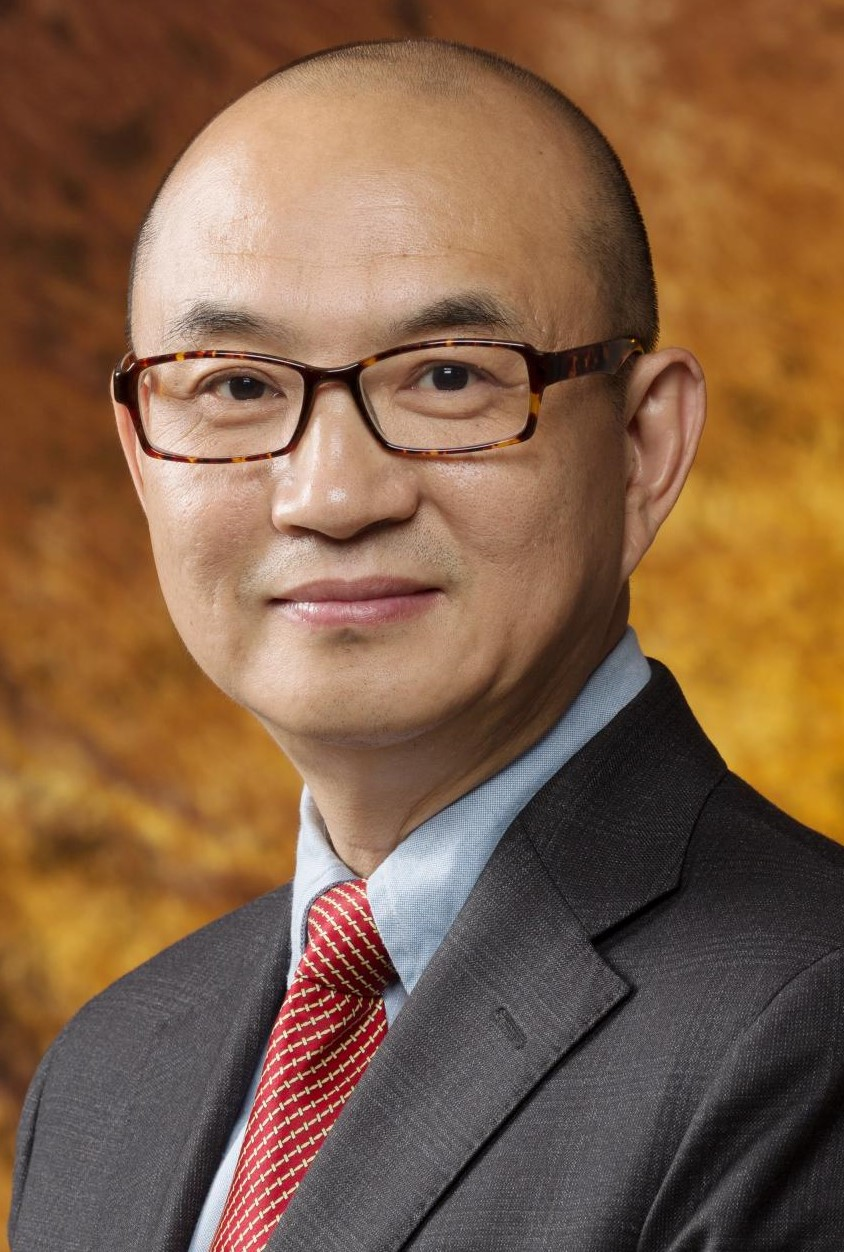
Liu Zhenya is a Grade-II Professor of Finance at the School of Finance, Renmin University of China. With a career spanning both academia and industry, he is a pioneer, trailblazer and practitioner in hedge fund research and practice in China. He has published more than 20 books on China's financial system and econometrics, along with 70 papers in leading international journals including the Journal of Econometrics, Journal of Business and Economic Statistics, Econometric Theory, Risk Analysis and Journal of Empirical Finance. His research focuses on financial econometrics, statistical factor models, stochastic optimal stopping times, random matrix theory and machine learning, and hedge fund strategies.
Research Highlights: Professor Wu Ke's Team
The paper "Identifying factors via automatic debiased machine learning," published by Professor Wu Ke's team in the Journal of Applied Econometrics, has been selected as a 2024 Top Cited Article.
Factor identification in asset pricing has long been a core issue in modern finance research. As the "factor zoo" continues to expand and the number of candidate explanatory variables keeps growing, accurately identifying the risk factors that genuinely possess pricing ability in high-dimensional data environments has become a major challenge for international asset pricing research.
Addressing this frontier question, the paper innovatively introduces the automatic debiased machine learning (ADML) method into asset pricing research, robustly identifying the marginal pricing effect of individual factors within a framework that allows the stochastic discount factor to take a nonlinear structure. The study shows that this approach can effectively mitigate the problems to which traditional machine learning methods are prone in high-dimensional financial data analysis, such as estimation bias, overfitting and unreliable statistical inference, thereby providing a new research path for factor identification in complex financial environments. Empirically, the authors conduct systematic tests based on US equity market factor data from 1976 to 2017, and find that, compared with the traditional linear framework, the nonlinear identification method reveals more risk factors with significant pricing ability and demonstrates stronger advantages in factor selection and model explanatory power. Furthermore, the study extends the analysis to the Chinese stock market and finds that sentiment-driven factors have greater explanatory power in the Chinese market, providing new empirical evidence for understanding the differences in asset pricing mechanisms across market environments and investor structures.
The value of this work lies not only in its methodological innovation, but also in advancing machine learning methods from general technical tools into a research paradigm with explanatory power in financial economics. It carries important implications for high-dimensional asset pricing research, the development of financial econometric methods, and the theoretical characterization of empirical facts in the Chinese market.
The Journal of Applied Econometrics is a leading academic journal in the field of econometrics, with extensive international influence in econometric methodology innovation and empirical economic research.
About Professor Wu Ke
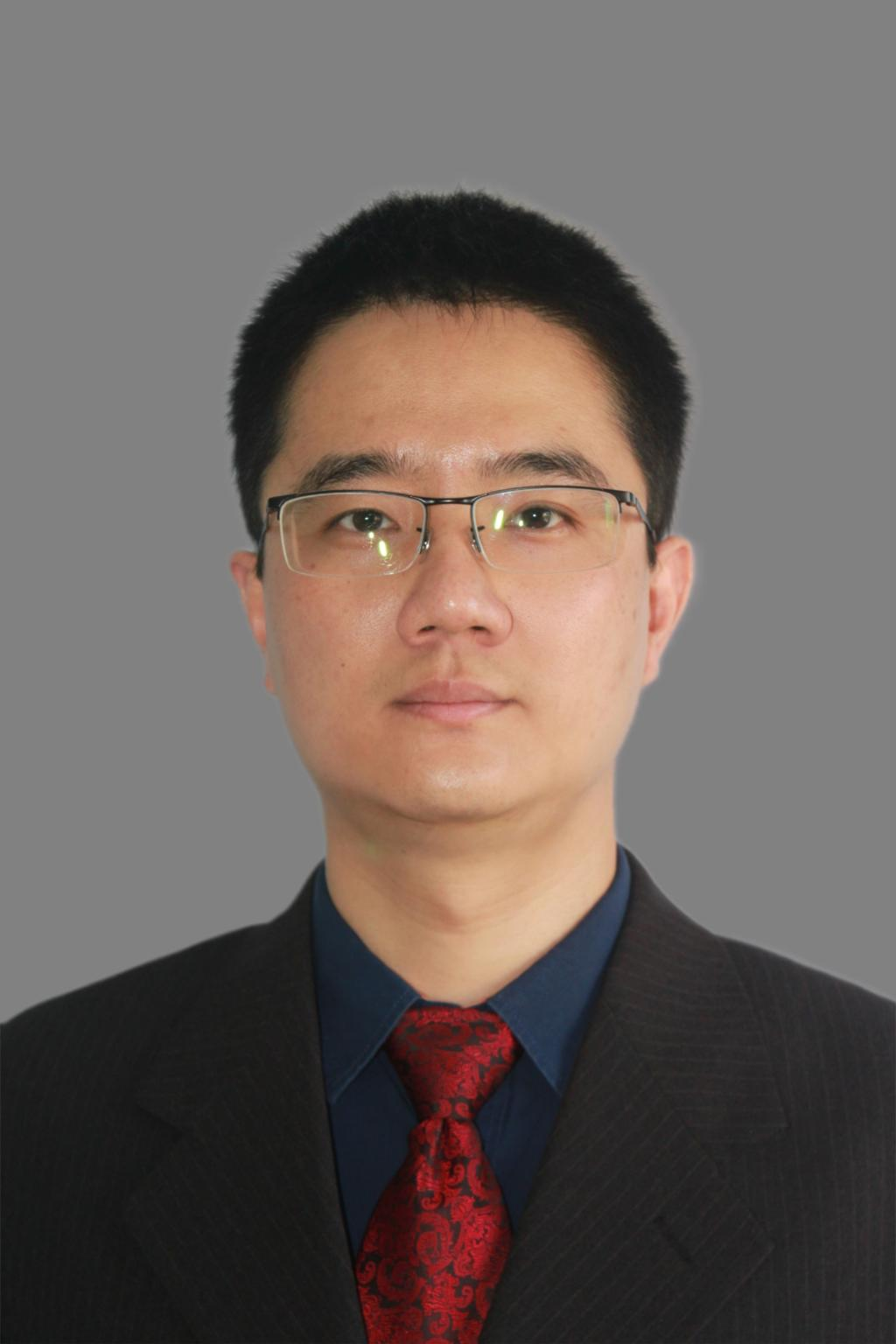
Wu Ke is a Professor and doctoral supervisor at the School of Finance, Renmin University of China, where he serves as Chair of the Department of Applied Finance and Deputy Director of the Future Financial Innovation Engineering Center. His main research interests include asset pricing, portfolio management, large language models, machine learning and financial econometrics. He has led several projects funded by the National Natural Science Foundation of China and participated in the National Key R&D Program of the Ministry of Science and Technology. He has published the academic monograph Asset Pricing and Machine Learning and the textbook Financial Big Data Analytics, and has published more than ten papers in leading international journals such as Management Science, Journal of Financial and Quantitative Analysis and Journal of Applied Econometrics. He has been recognized as a Wu Yuzhang Young Scholar at Renmin University of China and has received awards for teaching excellence and outstanding research achievement.